
What Is ASPM? Application Security Posture Management, Explained


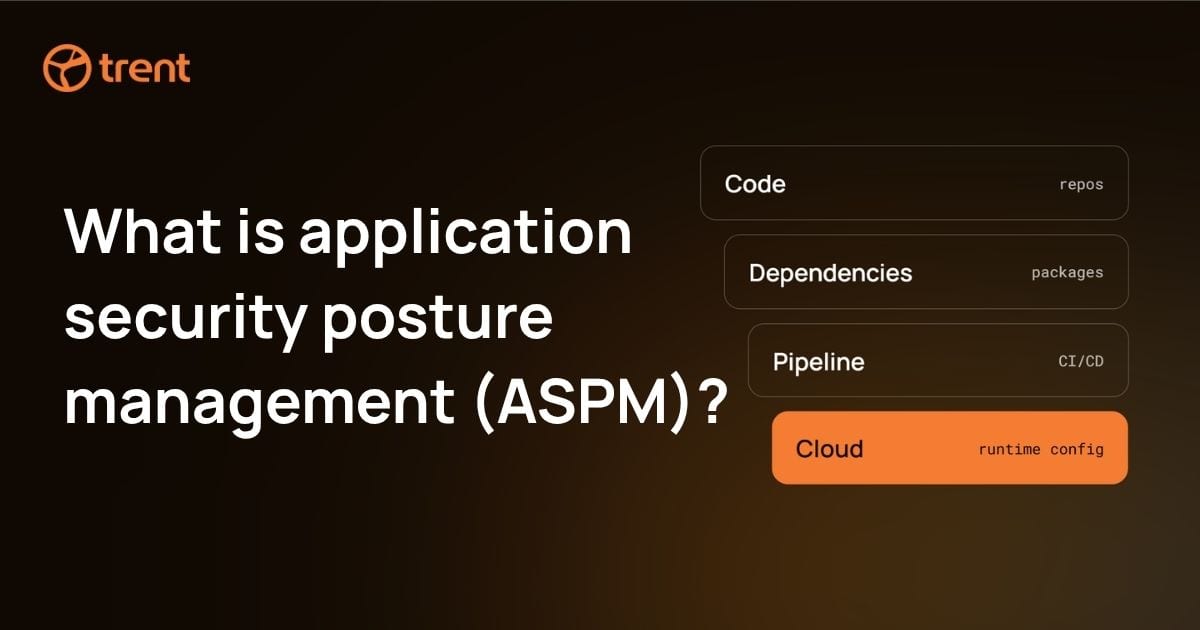
ASPM (application security posture management) is the practice of seeing and reducing security risk in the applications you build, from code through deployment, usually with a tool that merges scanner findings, ranks them and routes them to owners. This page is about application security, not the ASPM power-saving setting (Active State Power Management) in your BIOS or PCIe settings.
Core functions of ASPM:
- Pull findings together: results from SAST, SCA, DAST, and secrets scanners in one place, duplicates merged.
- Rank by real risk: whether a flaw is reachable and exploitable, and how much the app matters, not each tool’s own severity label.
- Get it fixed: route each finding to the team that owns the code and track it to a fix.
Why teams use it:
- Too many alerts: several scanners, the same flaw reported more than once.
- Siloed tools: each scanner has its own dashboard and its own idea of “critical”.
- Slow fixing: nobody knows who owns a finding, so it sits.
An ASPM platform is one way to get posture. Posture itself is the outcome: you know what you run, what is truly exploitable, who fixes it, and whether the fix held.
Why application security posture management exists
You added a scanner for each new risk, and none of them talk to each other. Black Duck’s Global State of DevSecOps survey found 82% of organizations use between 6 and 20 security testing tools, and 60% say between 21% and 60% of their security test results are noise: false positives, duplicates, or conflicts.
Picture one outdated logging library. It shows up as three tickets, from SCA, the container scanner and a second dependency check in CI, at three severities. None says whether your code ever calls the vulnerable function, and none has an owner. Multiply that by every repo and you have the backlog ASPM was built for.
Gartner introduced ASPM in a May 2023 Innovation Insight report, updated it in January 2025, and the market treats it as the successor to ASOC (application security orchestration and correlation), which stopped at correlating scanner output. ASPM is still a named category in Gartner’s July 2026 Hype Cycle for Application Security.
What ASPM tools do
ASPM tools do five jobs. Here is what each looks like on a normal Tuesday.
Aggregate
The tool connects to your scanners, repos, CI pipelines, and cloud accounts, and keeps an inventory of your apps. Last night’s SAST, SCA and secrets results land in one list instead of three inboxes.
Correlate and de-duplicate
It merges the same flaw reported by several tools. Those three logging-library tickets become one.
Prioritize
Better tools rank by whether your code can reach the vulnerable function, whether the flaw is exploitable, whether the app faces the internet, and how much the app matters. Reachable is not the same as exploitable, so ask which of these a product actually computes. Done well, a reachable flaw in the payments service outranks a “critical” in a dead test folder.
Route to owners
It maps code to teams and opens tickets where they already work. The finding lands in the owning team’s issue tracker, not your inbox.
Track to fix
It follows each ticket and reports open risk over time. You can see which teams are past their fix deadline. A closed ticket is not proof the risk is gone. Ask each vendor how it checks that a fix worked and catches regressions.
False positives cost more than time
Every false alarm teaches developers to ignore the next one. Trent checks each finding against how your application actually works before it reaches them.
ASPM vs. CSPM vs. CNAPP vs. AI-SPM
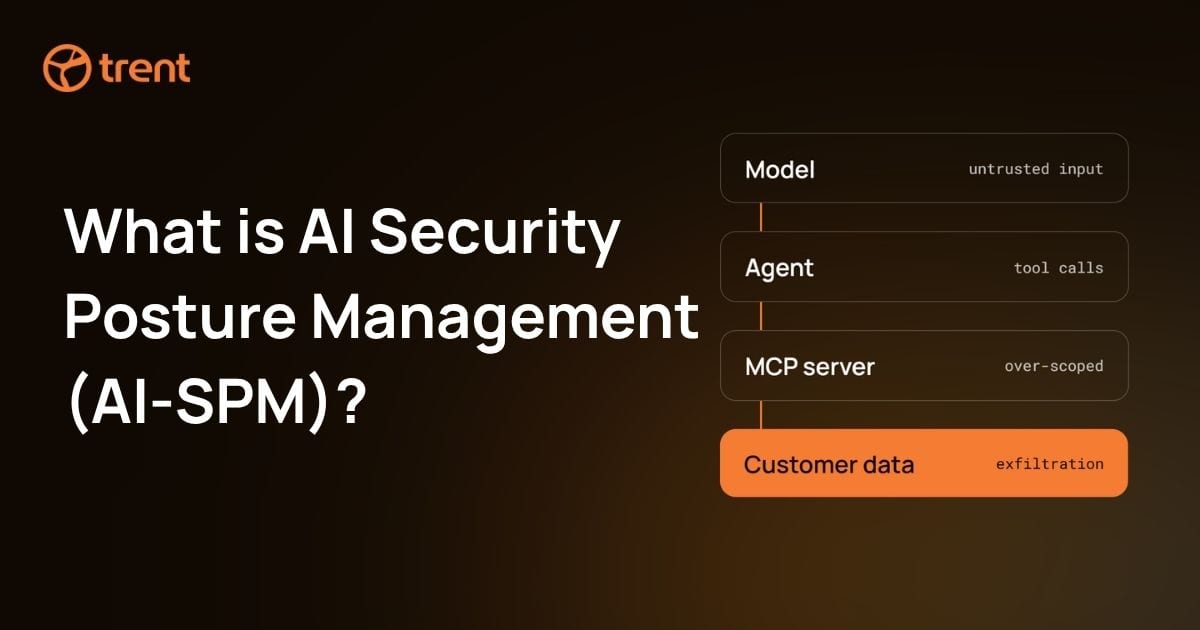
ASPM covers risk in the applications you build. CSPM (cloud security posture management) checks how your cloud is configured. CNAPP (cloud-native application protection platform) bundles cloud posture, workload protection, and more into one cloud platform. AI-SPM (AI security posture management), a newer category, inventories and scores the AI models and services you run, and in some products your agents. The boundaries overlap.
| ASPM | CSPM | CNAPP | AI-SPM | |
|---|---|---|---|---|
| Stands for | Application security posture management | Cloud security posture management | Cloud-native application protection platform | AI security posture management |
| What it watches | Your apps, code and findings, from commit to deployment | Cloud account settings, IAM, network exposure | Cloud infrastructure and workloads, from build to runtime | Models and AI services; some products also cover agents, MCP servers and data paths |
| Typical input | SAST, SCA, DAST and secrets results; repo and pipeline data | Cloud provider APIs | Cloud APIs, container images, runtime sensors | Cloud AI service APIs, source code, or both, depending on the product |
| Example problem | One reachable flaw reported by three tools at three severities | Public storage bucket | Exposed container running a vulnerable image | Agent with write access and an internet connection |
| Usually bought by | AppSec or platform engineering | Cloud security | Cloud security, often the CISO | Security teams running AI in production |
- vs CSPM: CSPM mostly checks your cloud settings and what is exposed. ASPM mostly checks the risk in your code. Code-to-cloud products now do some of both.
- vs CNAPP: CNAPP starts from the cloud and often adds code scanning; ASPM starts from the code.
If your application calls models or runs agents, see what AI-SPM covers. ASPM is the posture of the application; AI-SPM is the posture of the AI inside it.
What ASPM tools do not do
The layer that pulls findings together cannot find what its inputs miss or finish a fix on its own, and a dashboard is not a posture.
- It cannot see what its inputs miss. If no scanner ever looked at a file, your ASPM tool has nothing to rank there. ArmorCode is built to sit on top of the scanners you already have. OX Security, Cycode, Apiiro, Legit Security, Checkmarx One and Black Duck also ship their own scanners, which add coverage but have limits of their own. Your coverage is only as good as the scanning underneath. Our list of the best SAST tools covers that layer.
- It does not finish the fix. OX, Legit, ArmorCode, Checkmarx and Black Duck Polaris now draft guidance, patches or pull requests, or run remediation agents, with scope that differs by product and plan. Someone still has to review the fix, ship it, and confirm it worked.
- A dashboard is not a posture. A ranked list nobody works through is still a list.
Two ways to get application security posture
You can buy a platform that pulls findings together and routes them, or bring in an AI Security Engineer that judges what is exploitable and verifies the fix. Many teams end up using both.
Good posture has five signs:
- An inventory of your apps and their components
- Findings ranked by what is reachable and exploitable
- An owner for each finding
- A known time to fix
- Fixes verified, not just closed
The ASPM platform connects to the scanners you run (and often brings its own), merges and ranks the output, routes findings to owners and tracks time to fix. It is strongest on ownership, SLAs and audit reporting across many tools and teams, and it needs good scanning underneath plus someone to tune it.
The second way is an AI Security Engineer. Trent is an AI Security Engineer that sits on top of the tools you already run, as the aggregation and judgment layer across them. It reads what your security tools already found (any SARIF export) and judges each finding against your real system, so the noise drops to what is exploitable in your context, with a recommended fix for each. Then it keeps going into your cloud, AI agents, and MCP servers. SAST, DAST, and software composition analysis are not obsolete, and Trent does not replace them.
Point it at a repo, and it reconstructs the architecture from the real code, then inventories the whole system: API services, databases, object storage and networking, plus the AI layer on top (agents, tools and MCP servers), and tags each by what it can actually do: Read, Write, Execute, and Egress. From there Trent draws the capability graph and traces attack chains, so the ranking reflects how your system is actually wired. Then Trent recommends the fix, often as a ready-to-run prompt for your coding assistant. Your team decides, your coding agent applies it, a re-scan confirms it landed, and Trent flags it if a later change breaks it again.
Measured against the five signs, Trent covers the inventory, the exploitability ranking, and the verified fix. Trent is not a WAF, does no runtime blocking, is not a pentest service, and never changes your code itself. Here is how it handles the code and agents your team ships with AI.
Do you need an ASPM platform?
Usually not until several scanners and teams produce findings nobody owns. Our rule of thumb, not a survey result: under three scanners and under 50 engineers, probably not yet. You may need one sooner if an auditor wants one report across all your tools, or nobody can say who owns half your services.
| Your situation | What usually fits |
|---|---|
| Under three scanners, under 50 engineers, no dedicated security engineer | Not yet. Tune what you have, fix by reachability, or use an AI Security Engineer to assess and verify fixes |
| Three or more scanners, several teams, findings without owners | A layer on top of your scanners that ranks, routes and tracks findings |
| Audit reporting that has to roll up findings from many tools across many teams | An ASPM platform, for cross-tool reporting and SLAs |
| Shipping agents or a lot of AI-written code | Add an assessment that reads the architecture and the agents, not only scanner output |
In the first row? This week, list your scanners and where their findings overlap. Then take the ten worst findings in your internet-facing services and check whether your code actually calls the vulnerable path.
The last row is newer ground. Teams shipping with coding agents tend to reach for controls inside the agent’s loop, such as a check that makes the agent rewrite insecure code before it lands, rather than another dashboard.
ASPM tools and vendors
Many ASPM products pair their own scanners with a posture layer; others sit on top of the tools you already run. Cloud suites such as Wiz and CrowdStrike sell ASPM features too; this matrix covers the AppSec-side products. It shows what each vendor says about itself as of October 2026. Capabilities vary by edition, and it is not a ranking.
| Vendor | Own scanners | Pulls in other tools | Typical fit |
|---|---|---|---|
| OX Security | Yes, native scanning suite | Yes | Scanning and posture from one vendor, with AI-drafted fixes |
| Cycode | Yes: SAST, SCA, secrets, IaC, containers | Yes, connectors | One platform for code, secrets and pipeline security |
| ArmorCode | Built around your existing tools | Yes, hundreds of integrations | Many scanners you want to keep |
| Apiiro | Deep code analysis, plus native secrets and open source scanning | Yes | Code-to-runtime context across many repos |
| Legit Security | Yes: SAST, SCA, secrets | Yes | Native scanning with reachability alongside existing tools |
| Snyk AppRisk | Uses Snyk’s own scanners | Yes, third-party tools | Teams already on Snyk (Evo is Snyk’s separate agentic product) |
| Checkmarx One | Yes, Checkmarx engines | Yes, third-party and cloud signals | Teams already on Checkmarx |
| Black Duck Software Risk Manager | Optional Black Duck SAST and SCA modules | Yes, well over 100 testing tools | Large portfolios that want one risk view; Polaris is Black Duck’s separate testing platform |
| Trent AI | No; reads what your tools find (any SARIF export) | Yes | The judgment layer across many tools: exploitability in context, fixes recommended and verified, plus AI agents and MCP servers |
Compare a few on how they decide what is exploitable, how they route findings to owners, and how they recheck fixes. For Trent, access and pricing are available on request.
The short version
Know what you run, rank by what is exploitable, give every finding an owner, and check that fixes hold. Buy an ASPM platform when tool sprawl and ownership are the problem. Start with an assessment when you do not yet know what is exploitable. Either way, count your scanners first.
Reviewed by Zack Rossman, Head of Engineering at Trent AI
Which of these findings are actually real?
Bring your security tool results into Trent and get a verdict grounded in your code.
FAQ
What does ASPM mean in cyber security?
Application security posture management: the practice, and tool category, of pulling application scanner findings together, ranking them by real risk and getting them fixed. It is not the BIOS power setting with the same acronym.
What is the difference between ASPM and CSPM?
ASPM looks at the applications you build and their findings. CSPM looks at how your cloud accounts are configured. Many teams need both, and some products now cover both.
What is the difference between ASPM and CNAPP?
CNAPP is a cloud platform covering posture, workloads and runtime. ASPM starts from code and scanner findings. Some CNAPP vendors include ASPM features.
What are the best ASPM tools?
It depends on what you already run. Tools built around your existing scanners, such as ArmorCode, suit teams that already run many. Bundled platforms (OX Security, Cycode, Apiiro, Legit Security, Checkmarx One, Snyk AppRisk, Black Duck) also bring their own scanners. Compare integrations, reachability, owner routing and fix validation.
Do I need ASPM if I already have SAST and SCA?
Not always. With two scanners and one team, tuning them and fixing them by reachability may be enough. ASPM pays off when several tools and teams produce findings nobody owns.