



FAQs
What is AI code security?
AI code security covers two jobs: keeping code written with AI coding tools safe before it ships, and using AI to review code for security. Coding agents now write the configs and the agent setup too, so those need the same review as the code. Trent is your AI Security Engineer for both jobs.
How do you review AI-generated code for security?
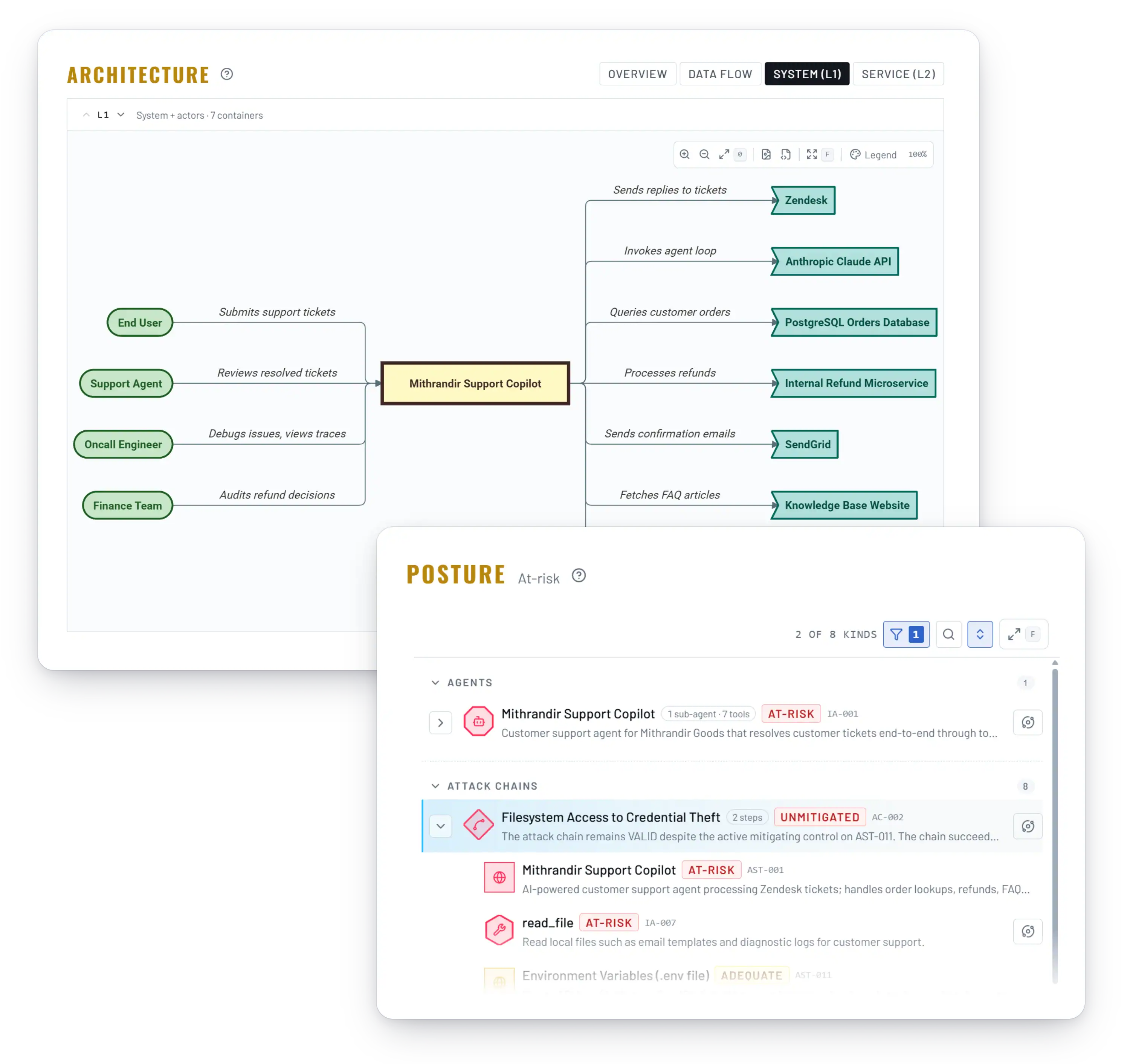
Look at the system before the diff. Map the architecture and what each agent, tool and service can reach, then check what the change does inside that map. Rank what you find by risk to your business and keep the evidence for each finding. Trent does that first pass on every repo you connect.
Is vibe coding safe?
It is as safe as the review behind it. Coding agents write more code, and grant more permissions, than anyone has time to read, so the risk is volume. Review AI-written code against the whole system, fix what matters, and check that the fix worked.
What are the security risks of vibe coding?
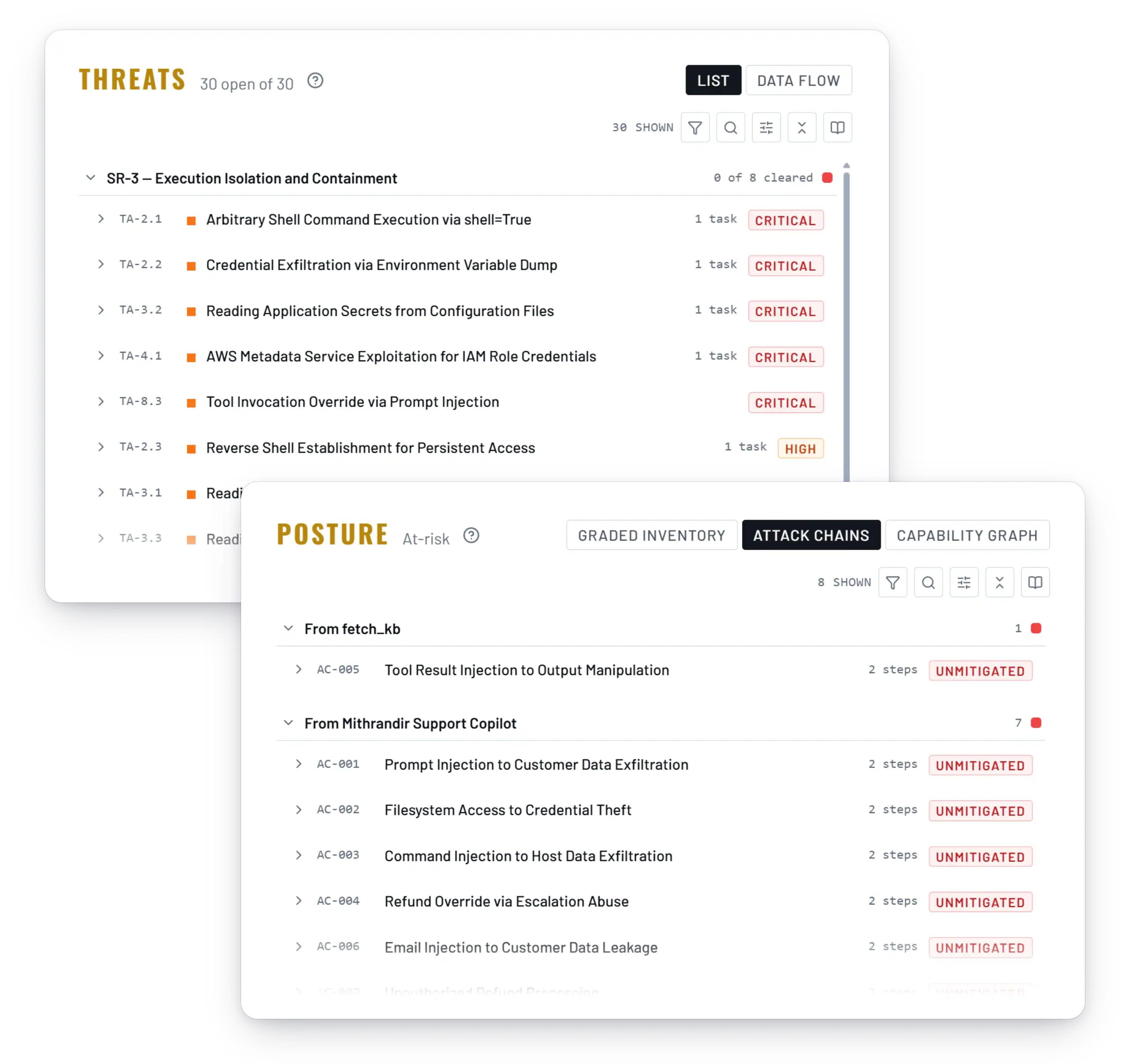
Common ones are permissions wider than the job needs, secrets left in code or config, missing access checks, packages a coding agent added that nobody chose, and hidden instructions in repo files that steer the agent. Each one can pass a quick review alone. Trent traces how they combine into attack chains across the whole system.
We already have an AI code reviewer. Why add a security reviewer?
Keep it. An AI code reviewer reads the change in front of it and catches bugs and style problems. A security review asks what an attacker could do with that change once it runs next to everything else. Trent answers that from your whole system. On CWE-Bench, Trent finds the right file to fix three times as often as raw Claude Code.
How do we practice secure vibe coding across a whole team?
Put the review where developers already work. Inside Claude Code and Codex, the Trent plugin can review a single diff, plan or config before anyone commits. Trent then fixes what it finds with your coding agents and verifies each fix after the merge.
Does Trent change our code?
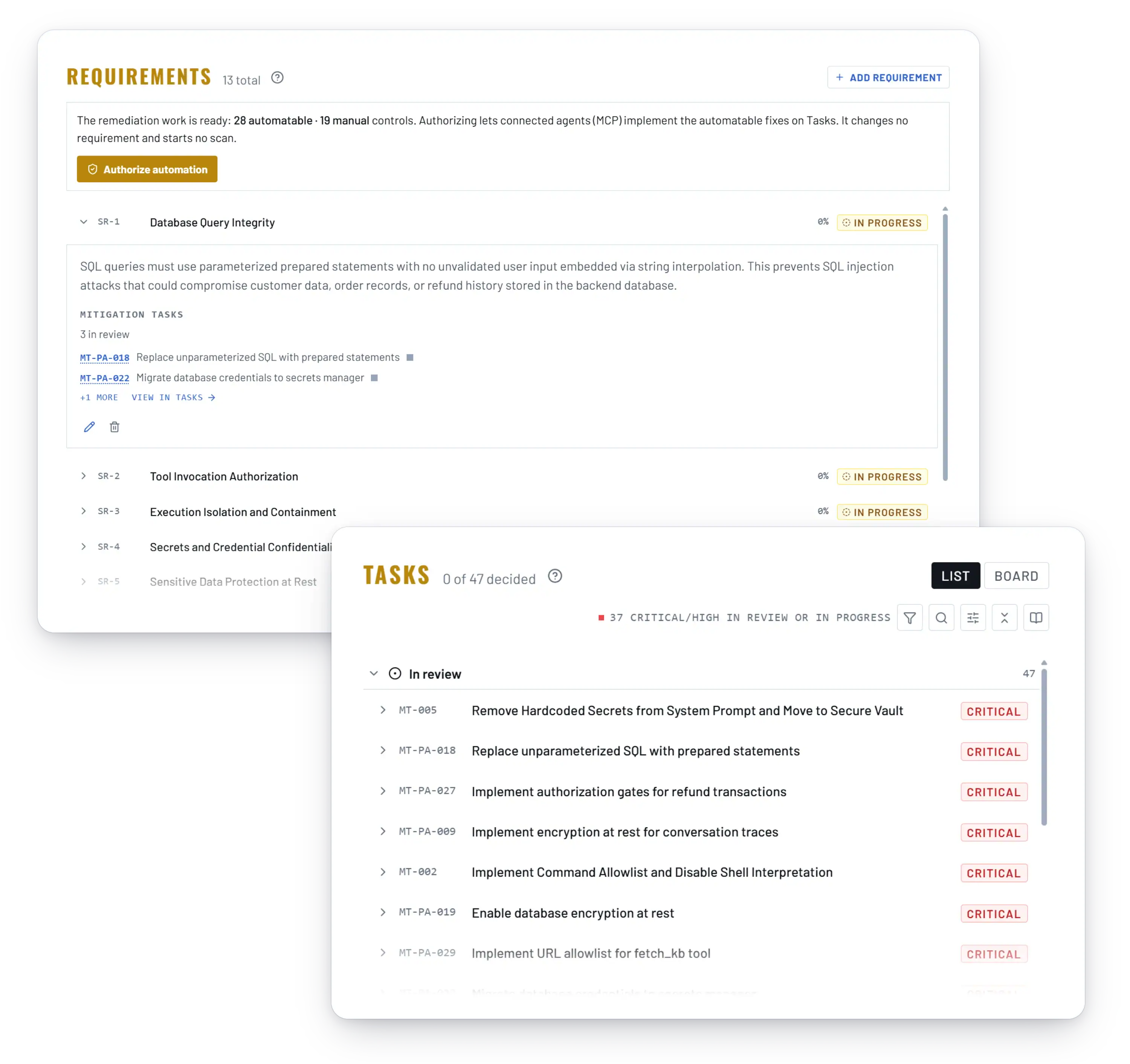
Trent fixes it with your coding agents. It hands them the exact instructions, the agent prepares the pull request, and Trent reviews it for security. You or your CI approve it. After the merge, Trent reviews the system again to verify the fix. From fully autonomous to a human in the loop: your call.
Does Trent replace our security tools or our secure code review?
No. Trent reads findings from your security tools through its Security connectors or a SARIF upload, read-only, and judges them against your real architecture. It adds a secure code review that looks at the whole system. You keep the tools and the reviewers you have.