

Skip to content

Small Security Teams

Your Security Team Is Stretched Thin, and Code Ships Without Review

Every company is getting more code and agents than security experts. Trent scales the expertise you already have.

Your developers ship code, cloud changes and AI agents every day, much of it written with AI coding tools. Your security team is a few people, sometimes one. For small security teams, that means a growing share of what ships never gets a security review. Trent AI is your AI Security Engineer. It reviews every repo, finds what is exploitable and fixes it with your coding agents.

Agentic AI Security Platform Leader, 2026 Cybersecurity Stars Awards

By submitting this form, you request access to Trent AI. We may contact you about your request, access status, and onboarding. You also confirm that you’ve reviewed our Privacy Policy and understand how your personal data will be used.

Why Small Security Teams Fall Behind

Many teams run at roughly one security engineer for every 80 developers. The developer side keeps growing. Yours does not.

  • Developers Ship More Than You Can Review

    With AI coding tools, each engineer now ships more code, infrastructure and agents than a year ago. Your review hours stayed the same. Pull requests get bigger, and a security review shrinks to a skim or gets skipped.

  • Hiring Will Not Close the Gap

    Good security engineers are rare, expensive and hard to keep. A new hire needs weeks to get up to speed, and the backlog grows while you recruit. If hiring is frozen, you cannot add anyone at all.

  • Every Tool Adds to the Pile

    Your security tools produce long lists of findings. Someone has to check each one against your system and decide what gets fixed first. On a small team that someone is you, and the design reviews wait.

A Small Security Team, With and Without Trent

The same people. More of the code covered.

Without Trent

  • Security reviews only the changes it has time for
  • Agents, tools and MCP servers missing from any review
  • Every finding from your security tools checked by hand
  • Fixes wait in a developer backlog
  • Hard to show what was fixed

With Trent

  • Trent re-assesses each repo as the code changes
  • Every agent, tool, skill and MCP server mapped, with what each can reach
  • Each finding judged against how your system runs, with the evidence shown
  • Fixed with your coding agents, or filed as a ticket in Jira or Linear with exact instructions
  • Every fix verified, with a full audit trail

How Trent Works

Understand. Plan. Secure.

Trent AI is the extra security engineer on every repo. It covers the ground, and your people make the calls.

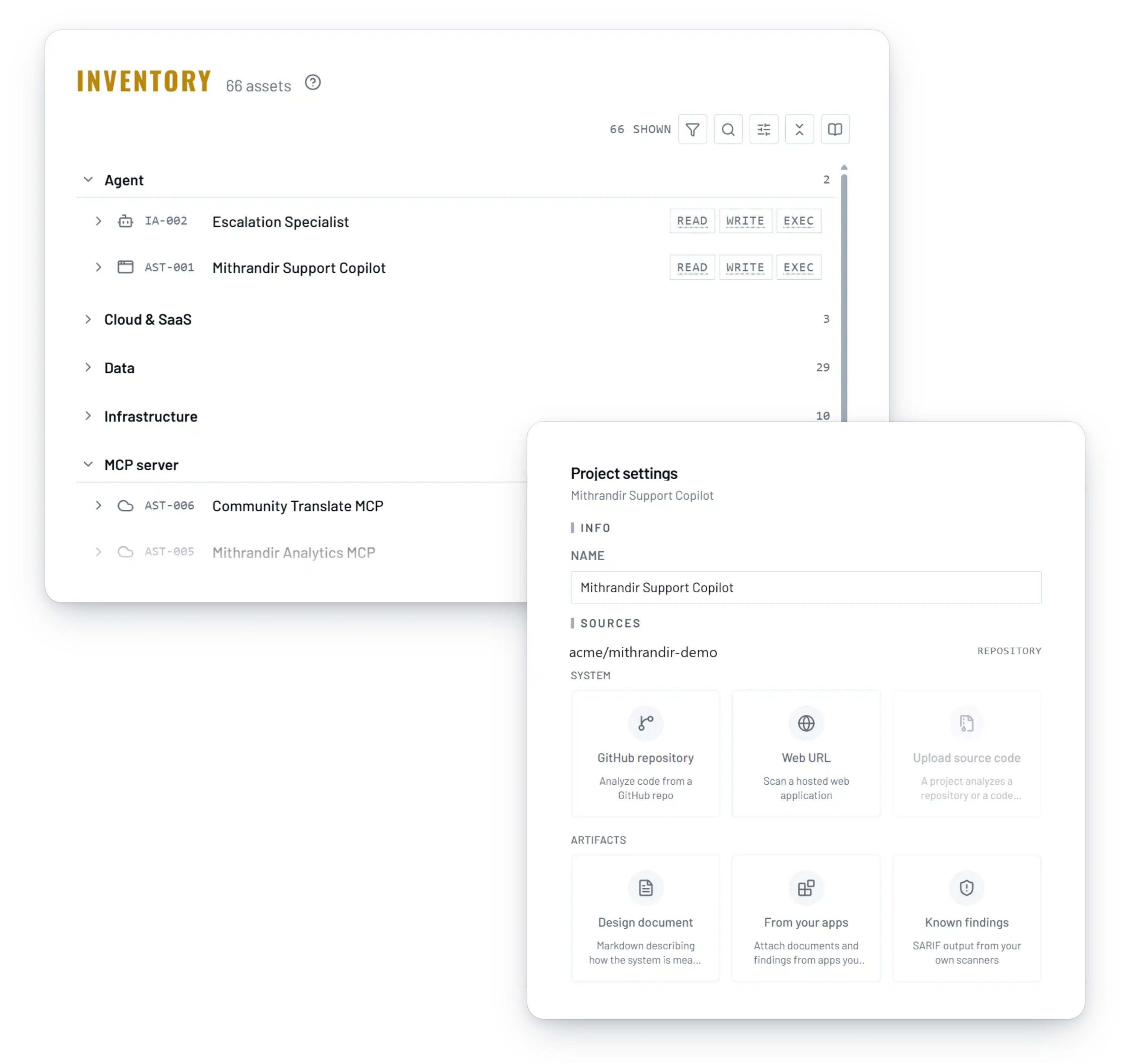
  1. Trent reads your code, configuration and design docs and rebuilds the architecture. It maps every agent, tool, skill and MCP server and what each can reach. It also reads the findings from your security tools, read-only, and the decisions your team already wrote down.

    Trent inventory of agents and MCP servers with what each can do, and the sources you can add: GitHub repository, web URL, design document and known findings from security tool

Built for Whoever Owns Security

The CISO or VP of engineering

You answer for everything your engineers ship, with a security team that did not grow. Trent keeps a current picture of every repo, from the threat model to verified fixes, ready to share with leadership or a customer’s security review.

The one security hire, or none yet

You cover many teams on your own, or security landed on a staff engineer by default. Trent does the first pass on every repo and gets fixes moving with your coding agents. You get a security engineer you can talk to.

Related problems: AI-written code piling up, a findings queue that never shrinks, threat models that go stale, the agents your team ships.

Why Trent

Trent was built for agents from the start. It reads what you build, shows the evidence behind every finding, takes correction, and fixes what it finds with your coding agents. Your code and context never leave your boundary.

Agentic AI Security Platform Leader, 2026 Cybersecurity Stars Awards

See Every Repo the Way a Security Engineer Would

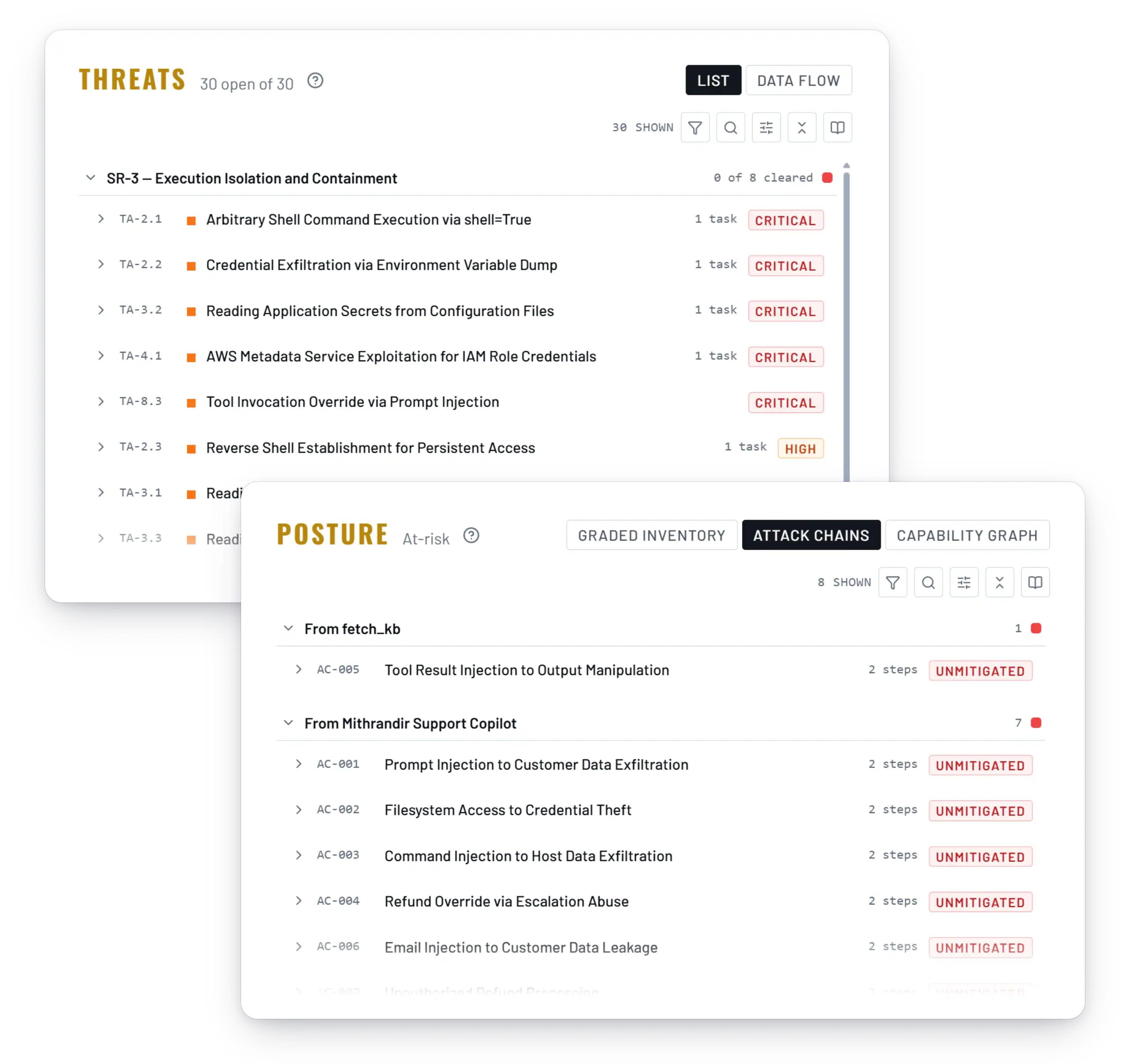
Connect a repository and bring in findings from your security tools. You will see your architecture, your agents and your ranked attack chains on your own code. Access and pricing available on request.

FAQs

How can a small security team keep up with developers who use AI coding tools?

Hiring alone will not do it, so give each security engineer more reach. Trent AI maps the system, judges findings in context and fixes what can be fixed safely in code with your coding agents. Your team keeps the judgment calls. More on why hiring cannot close the gap.

Will another security tool help a small team?

It depends on what you need to protect. Our guide to the best AI security tools sorts them by what each one covers, including open-source options. If the real problem is too few security people for the code you ship, one more tool will not fix it. That gap is security expertise, and it is the job Trent does.

Do we still need our security engineers?

Yes. Trent AI works alongside the security engineers you have and gives each of them more reach. It takes the first pass, the triage and the follow-up on fixes. Findings that need a person come to your team with the context and a recommended decision, and your team decides.

Is Trent an AI security agent?

Trent AI is your AI Security Engineer. It reviews your code, cloud and AI agents, finds what is exploitable and fixes it with your coding agents. It works inside the coding agent your developers already use, and you decide how much it does on its own.

How does Trent work with a security champions program?

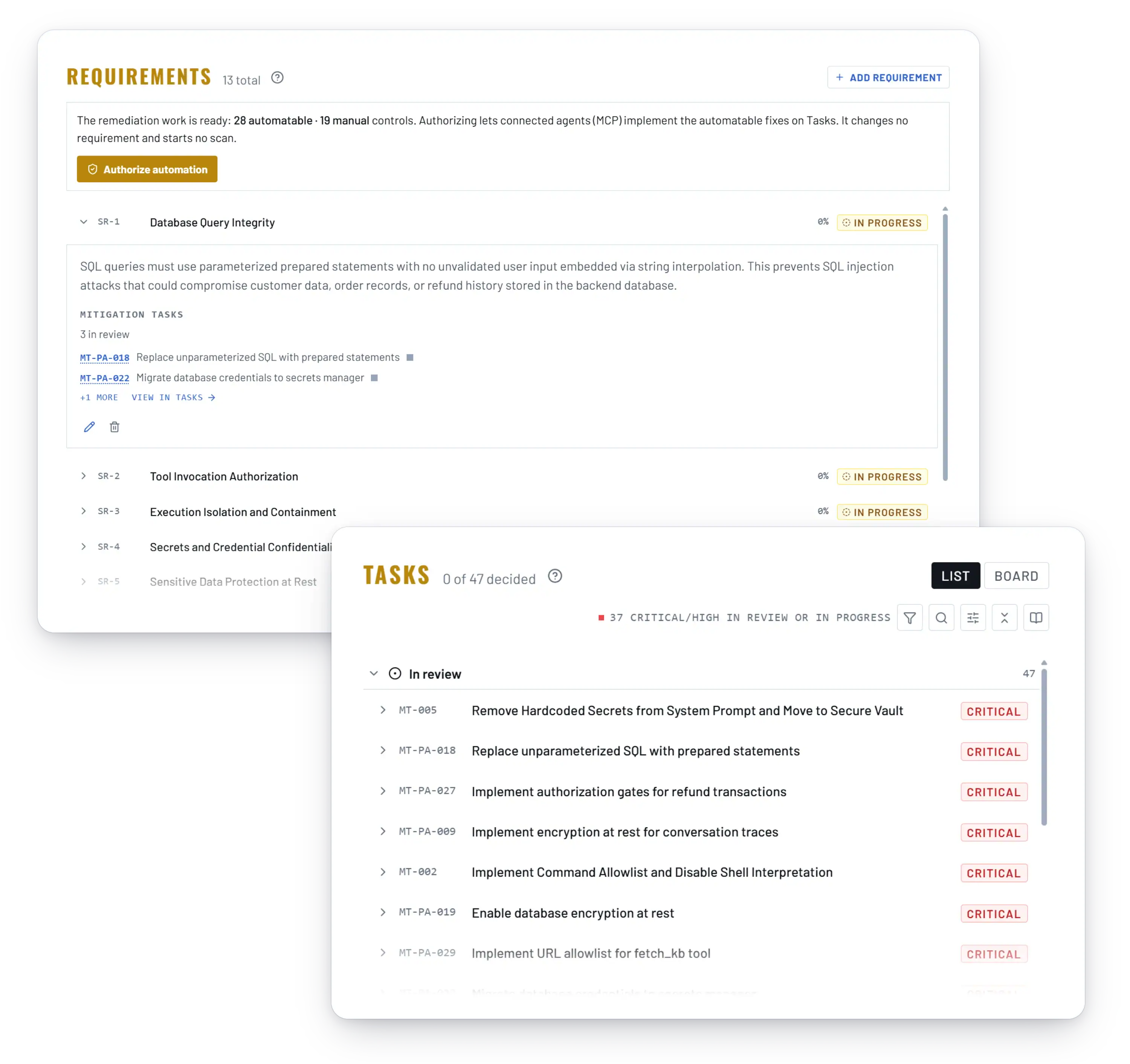
Security champions are developers who take on security for their own team. Trent gives each champion a security engineer to talk to, findings checked against how their system actually runs, and fixes that go through their coding agent. The security requirements Trent writes with your security team apply to every project.

Should we build our own AI security engineer instead?

You can. You then own the misses, the noise, the model choices and the 2 a.m. pager, with the same small team you have today. Our post on build vs. buy for an AI security engineer walks through the real costs, and the cases where building is the right call.

Is Trent a fit for startups with no security hire?

Yes. If you ship software and nobody owns security full time, Trent gives you a security engineer you can talk to, with fixes in the coding assistant you already use. It covers security for startups the same way it covers a stretched security team. Access and pricing available on request.

Will Trent change our code without asking?

Only as far as you choose. Trent guides your coding agent: it hands over the exact instructions, the agent prepares the pull request, and Trent reviews it for security. You or your CI approve it. From fully autonomous to a human in the loop: your call.